
El día que un cohete meteorológico casi desata la Tercera Guerra Mundial
In 1995, a Norwegian weather rocket triggered a false nuclear alarm in Russia, prompting President Boris Yeltsin to activate his "nuclear briefcase." For minutes, the world teetered on the brink of nuclear disaster due to a misinterpreted scientific experiment.
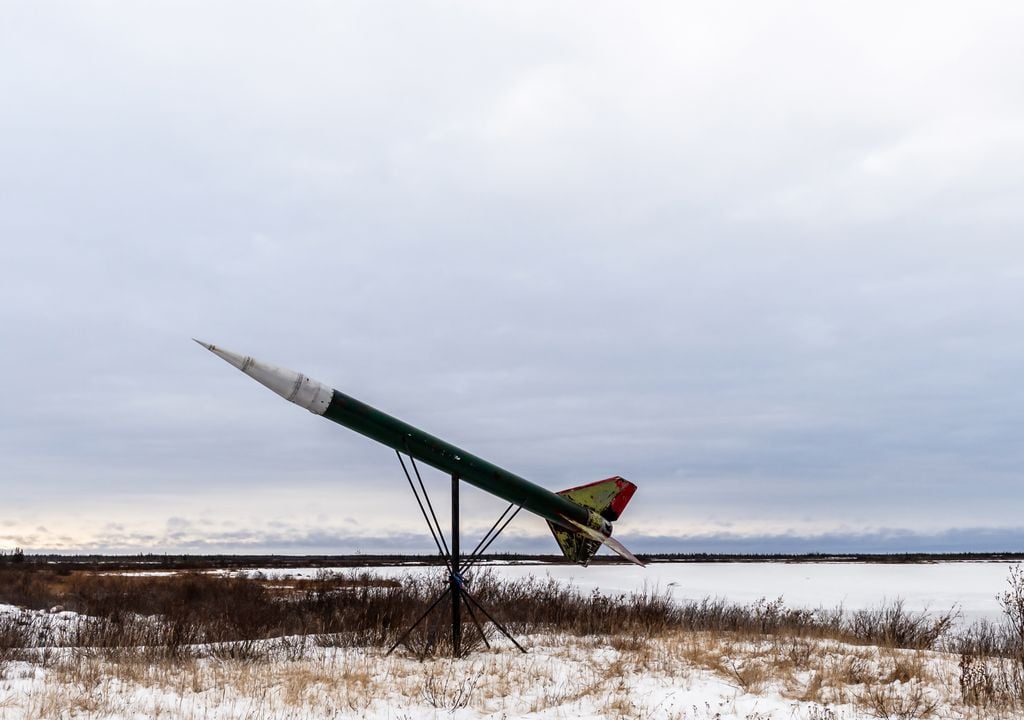
At first glance, the story seems like something out of a science fiction novel: a scientific rocket, launched for peaceful purposes to study the Northern Lights, mistaken for a lethal weapon capable of starting a nuclear conflict .
However, what happened on January 25, 1995 is as real as it is shocking, and it reminds us how precarious the balance of global peace can be , especially in these turbulent times.
A scientific experiment with unforeseen consequences
On the morning of that winter day, Norwegian and American scientists launched a sounding rocket – the Black Brant XII – from the Andøya launch site on the northwestern coast of Norway .

Their mission was none other than to study the aurora borealis over the Svalbard archipelago : a beautiful natural phenomenon, generated by the interaction of solar particles with the Earth's magnetic field.
The four-stage rocket ascended rapidly and reached a height of approximately 1,453 kilometers , a flight profile that to any radar seemed more typical of a ballistic missile than a scientific instrument.
The alarm: Is an attack imminent?
The problem arose when Russian early warning radars , located in the Murmansk oblast (province) , Russia's largest Arctic port, detected the launch.
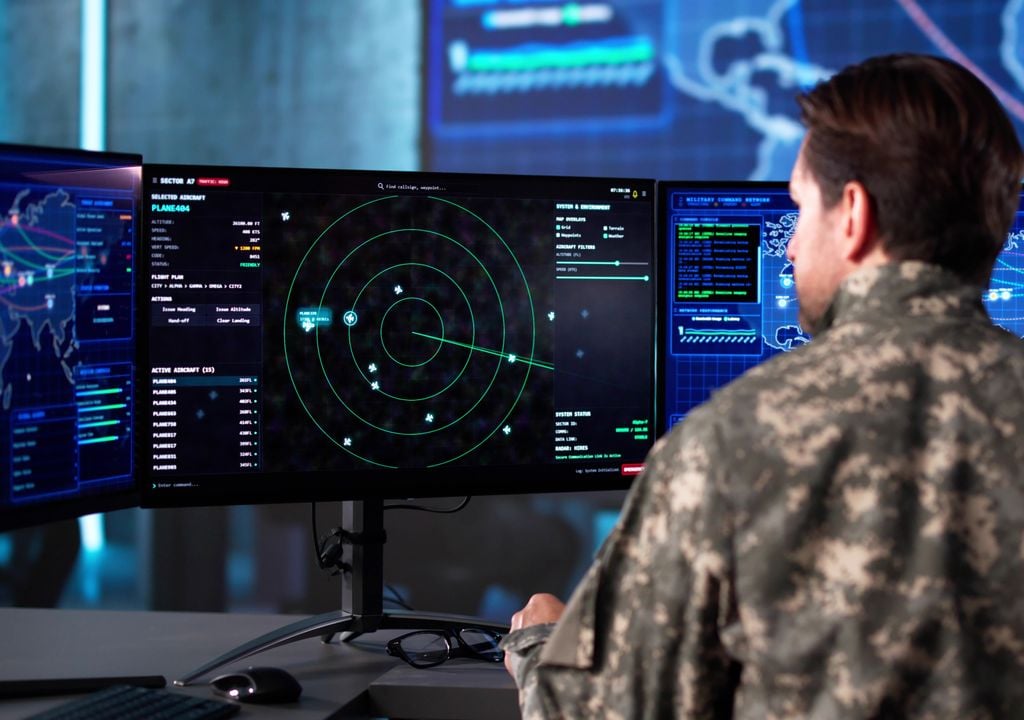
To the operators, the Black Brant XII's profile resembled that of a Trident, an intercontinental ballistic missile launched from US submarines. This suspicion was not unfounded: the trajectory, altitude, and speed matched what might be expected of a nuclear weapon aimed at Moscow.
What the radars failed to pick up was the essential context: that the launch had been notified in advance by Norway to more than thirty countries, including Russia… But the information never reached the technicians who operated the radar systems.
The nuclear briefcase is ready.
Within minutes, the information escalated rapidly through the Kremlin's chain of command . Russian nuclear forces were placed on high alert, and the so-called "nuclear briefcase"—known as Cheget —the command system through which the president could authorize a nuclear attack, was brought before Boris Yeltsin , then president of Russia.
25 de enero de 1995, el incidente del misil noruego.
— Andres Ocampo (@ju_188) January 27, 2025
Un equipo de científicos noruego-estadounidenses lanzó un cohete de investigación Black Brant XII de cuatro etapas desde el polígono de pruebas de misiles Andøya, ubicado en la isla del mismo nombre... pic.twitter.com/JDbLzQ5IZn
It was the first (and so far only) time in history that a nuclear leader had the real possibility of ordering a counterattack in response to what was believed to be an enemy strategic assault. The decision, in those tense circumstances, was whether to act immediately to safeguard the country's sovereignty or wait to confirm the threat.
While Yeltsin consulted with his top military advisors and grappled with the pressure inherent in the situation, time continued to tick away. In the midst of that brief but critical window of uncertainty, Russian defense systems even began preparing submarines and bombers for a possible nuclear response.
Eight minutes that could have changed everything
Fortunately, just eight minutes after the launch, Russian analysts realized that the rocket was not only not heading towards national territory, but had followed a trajectory that took it away from any potential target.

The threat disappeared as suddenly as it had appeared: in a matter of minutes, and without any explosion or crash occurring .
The Black Brant XII fulfilled its scientific mission, crashing into the Arctic Ocean near the Norwegian island of Spitsbergen after about 24 minutes of flight, while in Moscow, at last, a sense of calm returned.
Lessons from a false alarm
Although the Cold War officially ended in 1991 with the dissolution of the Soviet Union, tensions and mistrust did not disappear immediately. And this incident highlighted that nuclear warning systems can also make dangerous errors when communication fails.
As a result, international notification protocols were reviewed and strengthened to prevent perfectly legitimate scientific experiments from triggering disproportionate reactions due to a lack of communication.
More than two decades later, this episode is cited by both historians and security analysts as one of the "almost" moments that demonstrate how fine the line can be between peace and total annihilation .